Sunday, 11 December 2016

REPORT FROM A CADFA event

Privilege and Duty

CADFA’s UN Human Rights Day Event, Kentish Town, Saturday 10th December 2016.

On UN Human Rights Day, 10th December, I was reminded again of the importance of the work that CAFDA does. The date commemorates the day, in 1948, when the UN General Assembly adopted the Universal Declaration of Human Rights, passing resolution 423 (V).

Article 1 of the Declaration states: “All human beings are born free and equal in dignity and rights. They are endowed with reason and conscience and should act towards one another in a spirit of brotherhood.”

Every CADFA event brings together people who care about protecting human rights in occupied Palestine. Often, you will hear from people who have visited Palestine on cultural exchange or other projects. Sometimes, too, you can hear from Palestinians who share their personal experience of living under occupation. 

The stories of Gaza, under occupation and blockade, remain marginalised in the media, aside from coverage of peaks in attacks. However, at Kentish Town Community Centre, at CADFA’s UN Human Rights Day event, we had the opportunity to hear from a young woman from Gaza who now lives in the UK.

The people of Palestine are, she said, fully aware of the abnormality of living under occupation and blockade – but continue to live, to go to school and work, as an act of resistance.

She told us of the recent experiences of her mother who desired to visit Europe to see and hold her children, as is the right of every mother. It took her mother two months of travelling from one end to the other of the Gaza Strip to finally get permission from Egyptian authorities to exit the Gaza Strip into Egypt through the Rafah Crossing.

Having made it into Europe and seen her children (though she did not make it to the UK to see her daughter there) – and seen the ease with which people can move between states – her mother had to return to the Gaza Strip.

However, in Greece she was told by Egyptian officials that she could not travel into Egypt, for the Rafah Crossing into Gaza was closed. With no option, she travelled to Jordan to try to cross into Palestine. However, once in Jordan she was denied travel further and had the uncertainty of many weeks and fruitless efforts to seek help before finally being allowed to return to her family within Palestine.

We were told by the Gazan that the blockade of Gaza by Israel, with Egyptian complicity, results in deaths of Palestinians seeking medical treatment that is unavailable in Gaza due to the ongoing blockade. She told us that two of her cousins, both in their 30s, had died in preventable circumstances because they were not allowed out of the Gaza Strip.

She, who has not been able to see her mother or father for around three years, urged us to learn about the suppressed stories of Gaza and the West Bank and spread information and take advantage of our privilege in the UK.
In addition, the audience at CADFA’s UN Human Rights Day event had the opportunity to hear from several young people who had recently returned from a youth camp held in the West Bank. We heard of the restrictions that exist preventing Palestinians without the approved pass from entering Jerusalem and how painful this was for the British visitors to go to such a spiritual location without their new friends.
A visitor from the UK found that the segregated entrances of the Al Aqsa Mosque, in Jerusalem, were heavily guarded and, when she tried to enter, was challenged to recite a sura from Quran to prove that she was a Muslim, which she did reluctantly and, then, insisted that she finish when the soldier had had enough. She found that the soldiers in Jerusalem avoided speaking to her, as a tourist, but interacted with her Palestinian friends, asking them about her background.

We heard of the racial profiling that the visitors experienced on arriving in Israel, with those with Muslim sounding names being held back and questioned for a number of hours. These difficulties, however, have not, they were all in agreement, discouraged them from plans to return to Palestine.

One of the visitors told us about what she had learnt at the Prisoners’ Museum at Al Quds University, Abu Dis. She told us about the experiences of families who visit detained loved ones. They are only permitted to communicate with the prisoner from behind wire meshes and patrolling guards.

Finally, we were told that despite their guides, their visit was still a sheltered one. The harsh experiences faced by Palestinians were only heard through stories. A close encounter we heard about was of a stop at a checkpoint where the bus of visitors was turned back by Israeli soldiers. Later that day, the British visitors discovered, via a Palestinian friend, that sometime after their bus was turned away, a Palestinian schoolgirl was shot at the checkpoint.

The experience of children in the West Bank was provided to us through a video made by a Camden schoolteacher who had recently visited Palestine. We witnessed some of the apparent ‘normality’ of the children in their play and jokes, as well as their fears and hopes.
The sharing of these experiences and interactions between Brits and Palestinians renewed my sense of urgency about the human rights situation in Palestine – reminding me of how important it is, especially, to hear directly from Palestinians. It reminded me, also, of how important CADFA’s work is and how vital it is to support CADFA in these trying financial times.

Tuesday, 15 November 2016

CADFA's annual report


As every year, CADFA has just published its annual report for the period 2015-2016. As a reminder, the period begins at the 1st of April and ends at the 31st of Mars.
According to the model of the previous years, we find in this report a current situation of the context in Palestine and more particularly to Abu Dis as well as a description of this one in the United Kingdom. In both cases, the atmosphere seems tense and little inclined to improve. In answer to this report, the report details the actions of CADFA in Palestine as well as on the territory of the United Kingdom.
Also, the report details the exchange projects, organised by CADFA, between the United Kingdom and Palestine, without omitting to highlight the benefits from these: expertise’s improvement, spreading of the awareness, etc...

Besides, the report focuses on certain milestones which occurred in this period, whether it is because of CADFA or of the current events.

You can also find a lot of information there: news concerning the staff, connection between objectives and results and the establishment of new objectives, review of the events... An important part is dedicated to the financial aspect of the structure. CADFA unfortunately, has to deal with some difficulties concerning this point. Nevertheless, the association is still motivated and effective to work on the problem of human rights in Palestine.

He is very interesting to read this report for whom wants to inform about the situation with an organization the expertise of which on this matter is not anymore to be proved. It also allows to understand how works an association by diving into a detailed report.


Monday, 7 November 2016


Volunteering with CADFA : First impressions

While looking on the platform EVS for a body susceptible to welcome me in the realization of my professional application, which is necessary for the obtaining of my diploma (in the project management and the development aid), I founded and I decided to take part in CADFA’s activities (after being accepted off course).

I arrived in London last Friday (November, the 4th). I had found an apartment before coming and even if it is not for my taste and relatively overvalued (even in London, it seems), it is situated in Chalk Farm, very close to Camden Town, but especially close to most of the places of activities of CADFA, which is very interesting. Annika recommended me to balance the pros and the cons.

On Saturday, I participated in a meeting about the journey in Palestine which will take place at the end of the month and in whom I will take part. It allowed me to meet Nandita and some of my travelling companions. It was an interesting experience, the atmosphere was relaxed, even when we approached tender issues, what often arrives when speaking about Palestine.

Today I met Annika. We have discussed multiple subjects about the situation in Palestine and about activities of CADFA. It was very enriching, especially as we tried to determine together which could be my role within the organization and which profits I could benefit from my experience. One of the advantages of volunteering lives in the fact of building its work with the receiving organization.

I look forward to learn more and to provide my contribution to the actions of CADFA, through an experience which looks to be enriching on a professional level as well as on the human plan.

Tuesday, 21 June 2016

fayez and israeli girl in london

I got chatting with an Israeli girl, who told me that  she left Israel, because this country kills children and she decided to live in London for several years. She did not want to serve in the military because the service in the Israeli military service is compulsory and she respects Palestinian defenders of their land in an unequal struggle and she told me to live in peace and freedom, and I hope to live in peace
This girl knows about freedom and humanity
And I gave her a Palestinian keffiyeh

what comes next if Britain votes in or out

If Britain votes Remain .

David Cameron is likely to speak on the steps of 10 Downing Street, encouraging both sides of the debate to come together. If the result is close, he may say he intends to propose further reforms of the EU given the level of support for Brexit. The onus will be on him to show he has listened to the British people.Downing Street insiders believe he will not immediately reshuffle his cabinet but allow for a period of calm. To bring some unity within his party, he is also likely to call a vote on the issue of Trident in the last week before the summer recess. The renewal of Britain’s nuclear deterrent is a policy on which his party is more or less entirely as one, while Labour is badly split. The expected cabinet reshuffle is likely to come shortly before the party conference in the first week of October.
Sign up to our EU referendum morning briefing
Read moreOne senior Conservative MP said Cameron will want to be magnanimous to the losing side. Boris Johnson will be given a major portfolio, and it has been rumoured that Michael Gove could be made deputy prime minister, though Cameron is said to have been “genuinely hurt” by his friend’s attacks during the campaign. Priti Patel will also take a seat around the cabinet table.
A vote in favour of staying in the EU would boost George Osborne’s hopes of replacing Cameron as prime minister and be a blow to Johnson. But with the Tory membership overwhelmingly in favour of leaving the EU, it is unlikely to mark the end of the former London mayor’s ambitions.
A win for Remain will be a boost for Jeremy Corbyn, though the party is divided on whether Labour should be pushing the EU to make reforms to its rules on freedom of movement.
If the country votes to leave the European Union, it is widely expected that Cameron will announce his intention to resign within hours of the result. A number of senior Vote Leave campaigners, including a cabinet minister, have told the Observer this need not and should not happen. However professor of government Vernon Bogdanor points out that a loss of a referendum vote is often seen as a vote of no confidence in a leader.
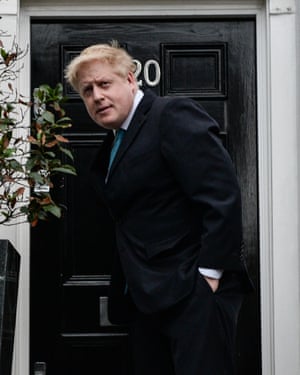
Boris Johnson
 Boris Johnson will be one step closer to becoming prime minister if Britain votes Leave. Photograph: Chris Ratcliffe/Getty Images
“In 1979 the failure of the devolution referendum led to the resignation of the Callaghan government and an early general election, which the government lost,” Bogdanor said. “In France in 1969 the failure of a referendum on constitutional reform led to the immediate resignation of President de Gaulle. “In 1972, the Norwegians rejected the advice of their government to join the European Communities; the prime minister resigned and the opposition parties formed a government.
In September 2014 David Cameron confessed he would have resigned if the vote in Scotland had been for independence.”
However, Cameron is likely stay on in an acting capacity until a new party leader is chosen by the membership, which may take several months. The successful candidate is likely to be someone who supported Brexit, and there may be pressure for the new leader, and prime minister, to call a general election.
“Following a vote for Brexit, parliament must decide what EU law it intends to preserve, what should be modified and what should be repealed,” said Bogdanor. “Brexiters might argue that this exercise is best carried out by those who believe in it, rather than by the pro-EU majority in the present House of Commons.”
Meanwhile, the prime minister is expected to immediately apply the article 50 procedure, which allows two years for talks, to terminate the UK’s membership and begin negotiations on the institutional and financial provisions of the separation. When agreement is reached, it must be passed in the Council of Ministers by qualified majority vote as well as in the European parliament and in the Commons and the Lords. The UK would then negotiate a separate deal to cover trading arrangements with the EU. That would require national ratification in every member state.
A vote to leave the EU might put pressure on Jeremy Corbyn, who some have criticised for what they see as half-hearted support for the Remain campaign. While it is unlikely that the Labour party’s membership would support a coup, one shadow cabinet minister said a vote in favour of Brexit could prove to be as damaging to Labour in England and Wales as the Scottish referendum was to the party north of the border.
“It would mark the moment at which the Labour vote ignored the party,” the MP said. “It will be a breach from the party, and millions of voters, especially in the north, will go elsewhere, maybe to Ukip, maybe to a new-look Conservative party.”


If Britain votes Leave


Tuesday, 14 June 2016

what is A B C in palestine

Learn more about Palestine What do you mean the division of areas of the West Bank into A B C                                                                                                                                                      Area A is under full control of the Palestinian Authority and consists primarily of urban Palestinian areas.Area B is under Palestinian civil control and shared Palestinian and Israeli security control and includes the vast majority of the Palestinian rural areas.Area C is under full Israeli control. Palestinian agencies are responsible for education and healthcare

CADFA IFTAR


CADFA will be holding an iftar at the beautiful Calthorpe Project, open to all -home-cooked food and entertainment in the garden if the weather is good or inside if it isn't. Come along and enjoy an evening that will fundraise for CADFA and also celebrate the achievements of the CADFA volunteers! Doors open 8.30.

On 25th June, welcome everybody